
Winter
Days 24–27 °C, nights 16–19 °C. Mostly pleasant; occasional showers. Ideal for outdoor activities and festivals.
Planning a trip or desert adventure? This guide to Dubai weather blends hard climate facts with real stories of sandstorms, rare rains, the 2024 floods, and how Dubai is adapting—so you can pick the best time, pack smart, and stay safe.

Dubai has a hot desert climate (Köppen BWh)—scorching summers, mild winters, and very little rainfall. Most days are sunny, but the desert can deliver surprises: dusty shamal winds and, on rare occasions, heavy rain.
Days 24–27 °C, nights 16–19 °C. Mostly pleasant; occasional showers. Ideal for outdoor activities and festivals.
Days warm to 30–32 °C, nights 20–25 °C. Bright, dry conditions—great for beaches and morning/evening desert trips.
Highs regularly above 40 °C (can exceed 45 °C). Humid; virtually no rain. Focus on indoor attractions and early/late outdoor windows.
Cooling from mid-30s into the 20s. Low humidity returns—perfect for desert camps, markets, and outdoor events.
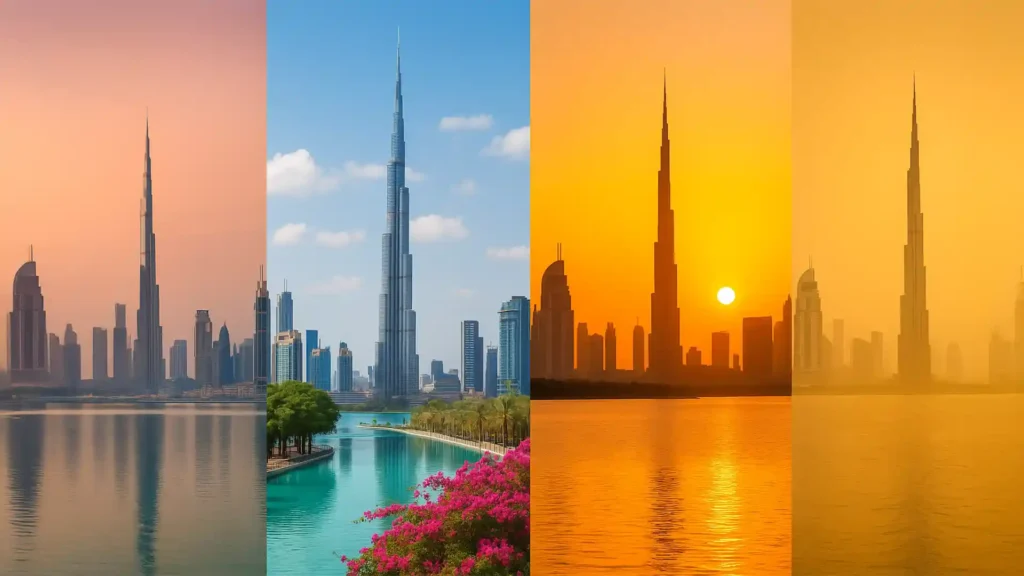
Dust and sand events are driven by strong north-westerly shamal winds that can reduce visibility quickly. Some years are dustier than others, with notable events logged across 2008, 2010, 2015, 2019, and 2022.

Rain is infrequent and short-lived, most common from November to March. Depending on thresholds, Dubai sees roughly 13–25 rainy days a year. Showers can be refreshing and photogenic—but intense storms can tax drainage and slow travel.
April 16, 2024 floods: The heaviest UAE rainfall in ~75 years swamped roads and disrupted DXB airport. In response, Dubai launched Tasreef, a long-term storm-water upgrade to increase drainage capacity by ~700% by 2033.


Traveler tips during rain: Allow extra airport time, avoid low-lying roads, follow UAE NCM alerts, and expect slower public transport and ride-hailing.
From late spring through summer, highs regularly top 40 °C (and can exceed 45 °C) with steamy humidity. “Feels-like” temperatures may push beyond 50 °C, and sea temperatures can approach ~37 °C.

For deeper planning, explore our practical guides: Best Time to Visit Dubai, What to Wear on a Desert Safari, Morning vs Evening Desert Safari, Overnight Desert Safari: What to Expect.
Dubai has a hot desert climate (BWh) with very hot, humid summers; mild winters; and scarce rainfall.
November to April offers the most comfortable weather for outdoor activities and desert trips.
Yes. Seasonal shamal winds can kick up dust and reduce visibility. Authorities issue advisories on high-dust days.
Dubai sees roughly 13–25 rainy days per year, mostly between November and March. Heavy events are rare but possible, as in April 2024.
Daytime highs regularly exceed 40 °C and can pass 45 °C; “feels-like” temperatures may top 50 °C.
The city is expanding storm-water capacity with the Tasreef project, greening/shading districts under the Dubai 2040 Plan, and planting 100M mangroves by 2030.